


Tips for Choosing and Buying Emergency Exit Doors
Emergency exit doors are a critical component of a building’s safety system. Whether in office buildings, factories, hospitals, schools, or high-rise residences, emergency exit doors serve as the main evacuation route during emergencies such as fires, earthquakes, or other hazardous situations. For this reason, choosing and buying emergency exit doors should never be done carelessly. This article outlines essential tips for selecting emergency exit doors that are safe, compliant with regulations, and built for long-term durability.
1. Ensure Compliance with Safety Standards
The first and most important factor when choosing an emergency exit door is compliance with safety standards. In Indonesia, emergency exit doors are generally required to meet safety regulations and obtain fire and smoke resistance certification for up to 120 minutes, issued by the DKI Jakarta Fire Department, along with applicable building safety regulations.
For certain types of buildings, emergency exit doors may also need to comply with international standards such as NFPA or UL.
Standard-compliant emergency exit doors typically include specific features such as fire-rated resistance for a certain duration, one-way opening systems, and easy access without locks during emergency situations.
2. Choose Fire-Resistant Materials
The material of an emergency exit door plays a major role in determining its safety and durability. High-quality emergency exit doors are generally made of metal or steel with a specific thickness. These materials are known for their strength, resistance to damage, and ability to withstand high temperatures during a fire.
In addition, pay attention to the door’s finishing. Quality emergency exit doors are usually coated with heat-resistant and anti-corrosion paint, ensuring long-term durability even in humid environments.
3. Pay Attention to the Opening System and Accessibility
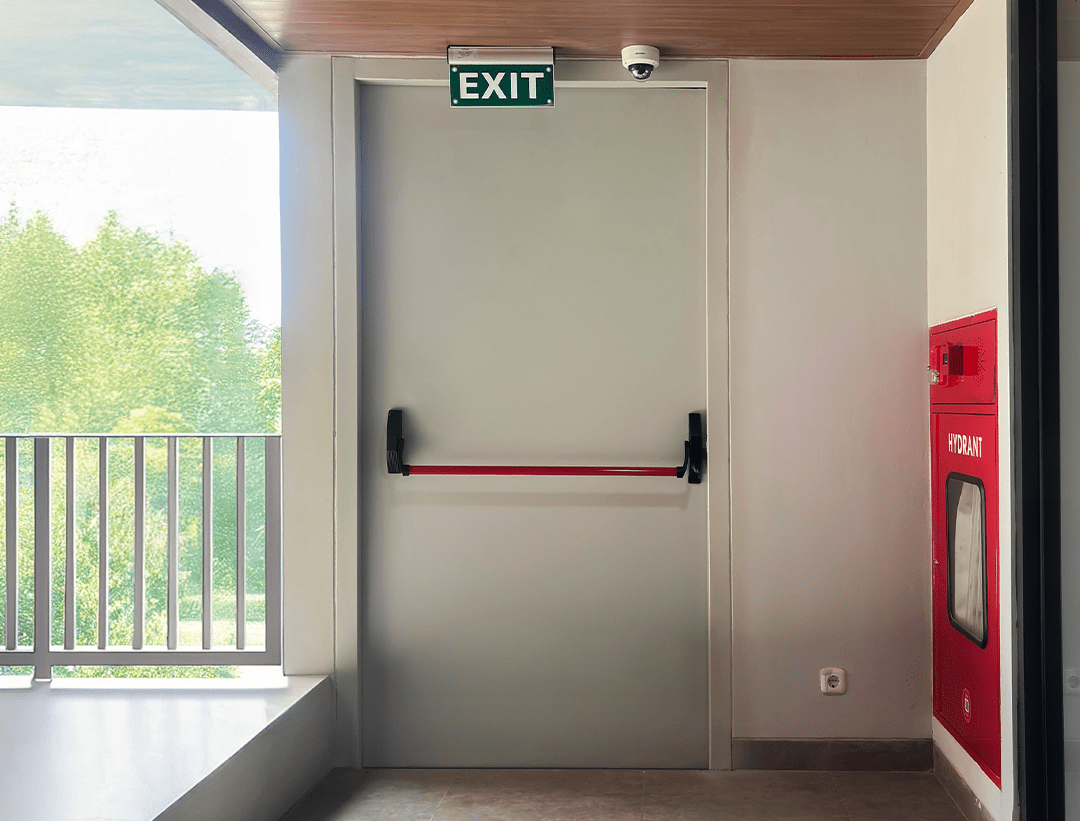
Emergency exit doors must be easy to open from the inside without requiring excessive effort. Panic bar or push bar systems are highly recommended, as they allow the door to open with a single push. This feature is crucial during panic situations, where there is no time to turn keys or operate handles manually.
Make sure the emergency exit door can only be opened from the inside while remaining secure against unauthorized access from outside. This system helps maintain building security while ensuring evacuation routes remain fully functional.
4. Match the Size and Design to the Building
The size of an emergency exit door should be adjusted to the building’s capacity and function. Buildings with a large number of occupants require wider and taller doors to ensure smooth and efficient evacuation.
In terms of design, emergency exit doors prioritize function over aesthetics. However, modern emergency exit doors are now available in clean, minimalist designs that blend well with both interior and exterior building styles—without compromising safety performance.
5. Consider Installation Location and Opening Direction
Emergency exit doors must be installed in strategic, easily accessible, and clearly visible locations. Common placements include the end of corridors, near emergency staircases, or along main evacuation routes.
The opening direction is equally important. Emergency exit doors must open outward, following the direction of evacuation, to prevent obstruction during emergency situations.
6. Choose a Trusted Manufacturer or Supplier
It is highly recommended to purchase emergency exit doors from a reputable and experienced manufacturer or supplier. Established manufacturers typically offer products with clear specifications, complete certifications, and reliable after-sales service.
In addition to product quality, consider added services such as product consultation, site measurement, and professional installation. Proper installation ensures the emergency exit door performs optimally according to its intended function.
7. Consider Maintenance and Durability
Emergency exit doors must always be in ready-to-use condition. Therefore, choose products that are easy to maintain and offer high durability. Hinges, locking systems, and panic bars should be inspected regularly to prevent jamming or malfunction.
High-quality emergency exit doors are designed for long-term use with minimal maintenance, making them more cost-efficient and reliable over time.
8. Match Your Budget Without Compromising Safety
Emergency exit door prices vary depending on materials, specifications, and features. While budget is an important consideration, safety should never be sacrificed for a lower price. Investing in high-quality emergency exit doors is a long-term protection strategy for both occupants and building assets.
Conclusion
Choosing and buying emergency exit doors requires careful attention to safety standards, materials, opening systems, and installation quality. Emergency exit doors are not merely building accessories, they are vital components of a comprehensive safety system. By selecting the right emergency exit doors, you not only comply with regulations but also provide maximum protection for all building occupants.
For strong, safe, and high-quality emergency exit door solutions, trust Alba Unggul Metal (AUM)—a proven and reliable manufacturer with decades of experience, committed to high standards and long-term durability.
SHARE THIS ARTICLE ON:


